
 Here’s an FAQ-style article on How to Teach Yourself — how to learn by yourself effectively, from setting up goals to staying motivated. If you like, I can also give you a shorter or local version.
How to Teach Yourself: FAQ
What does “teaching yourself” mean?
- Learning without formal classroom instruction. It means setting your own goals, choosing resources, managing time, practicing, and getting feedback.
- It can involve books, online courses, videos, mentors, practice, and experimentation.
- How to Teach Yourself Anything: Step-by-Step
Why should I teach myself instead of always doing formal classes?
Benefits:- Flexibility — You can learn at your own pace, and you decide what to focus on.
- Cost-effective — Many good resources (online, books, etc.) are cheaper or free.
- Because you have to adapt — In many fields, new things come out fast, so being able to teach yourself helps you keep up.
- Motivation & ownership — When you choose what to learn, you often care more, which helps you stick with it.
- It requires more self-discipline (you need to manage your own schedule).
- Without feedback, mistakes or misunderstandings can persist.
- It might be harder to stay motivated without external structure.
- How to Teach Yourself Anything: Step-by-Step
How do I start? What are the first steps?
- Define clear goals. Decide exactly what you want to be able to do, and by when. The clearer and more specific, the easier to plan around.
- Identify the prerequisites. What background knowledge or skills do you need? Do you need to learn the basics first? For example, if you want to learn physics, maybe review algebra.
- Find good learning resources. Books, online courses, tutorials, videos, mentors, forums. Pick ones that match your goal, your level (beginners vs intermediate), and your learning style.
- Set up a practice environment (a sandbox). A place or method where you can experiment, make mistakes, try things without fear of heavy consequences. For example: small projects, sharing work publicly, trying versions of what you’re learning.
- Make a plan & schedule. Break your goal into smaller parts. Use time blocks, and decide what you’ll work on each week. But allow some flexibility — learning may shift direction.
What methods help learning stick?
- Deliberate Practice. Focus on parts you are weak in; don’t just repeat what you already know. Push yourself.
- Spaced Repetition. Review information over increasing intervals rather than cramming.
- Active learning strategies:
- Test yourself (retrieval practice) rather than just re-reading.
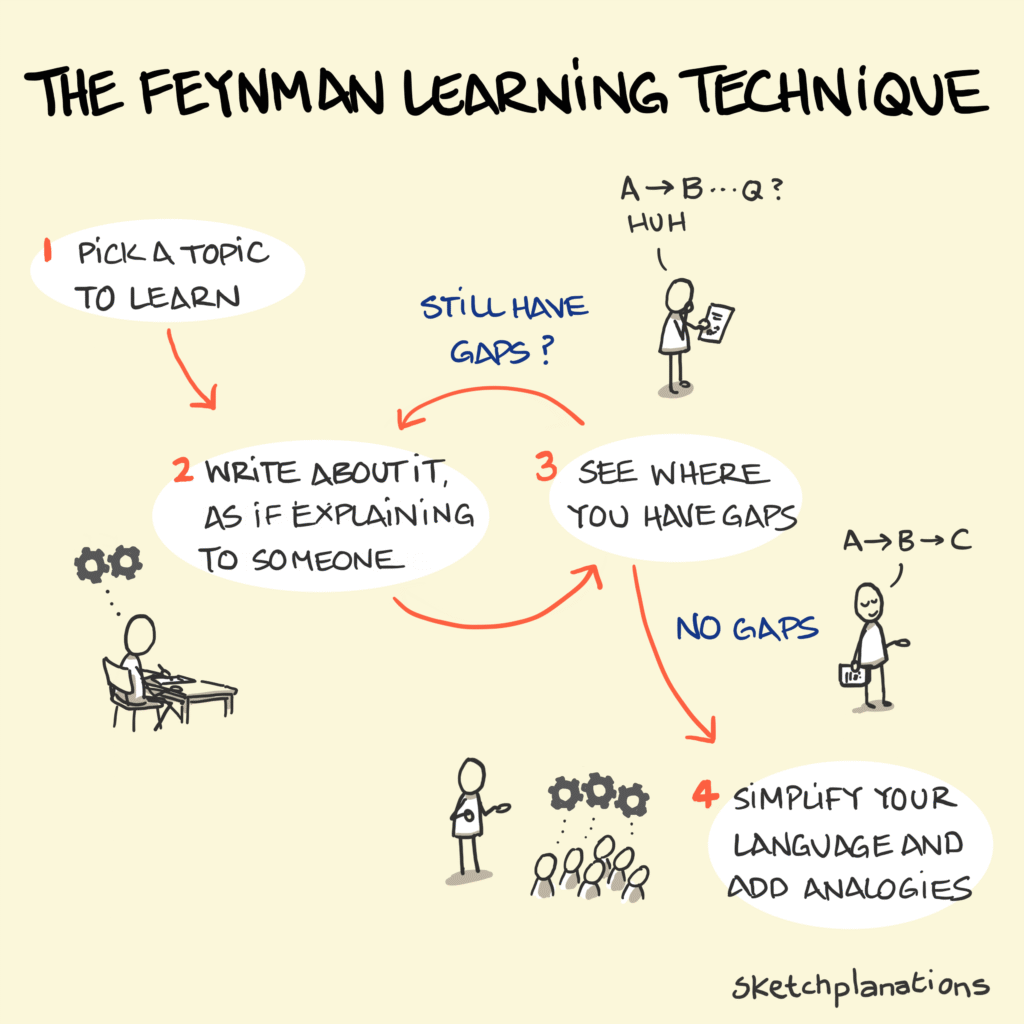
- Explain what you learn to someone else (or pretend you are teaching).
- Make mind maps or diagrams to see how ideas connect.
- Active learning strategies:
- Desirable difficulties. Learning can be more effective when tasks are somewhat challenging. Such challenges improve long-term retention.
- How to Teach Yourself Anything: Step-by-Step
How do I keep myself motivated?
- Set short-term milestones (so you can see progress).
- Celebrate small wins.
- Find community: forums, study groups, people learning the same thing. Getting feedback and encouragement helps.
- Mix things up so it doesn’t get boring (different types of resources, different formats).
- How to Teach Yourself Anything: Step-by-Step
How long does it take to learn something well?
- It depends on how complex the subject is, how much time you can devote to it, and what level you aim for.
- You can make useful progress relatively fast for many skills if you practice consistently. But mastery takes much longer.
- How to Teach Yourself Anything: Step-by-Step
Common mistakes & how to avoid them
| Mistake | Problem | How to avoid |
|---|---|---|
| Being too vague | Hard to know what to do next; progress is fuzzy | Define clear goals and break them down |
| Overloading resources or random learning | Learning becomes unfocused; you waste time | Choose a few good sources; follow a plan |
| Skipping basics | You may build wrong foundations & hit big problems later | Identify prerequisites, do fundamentals well |
| Not getting feedback | Mistakes go uncorrected; misunderstandings stay | Use external feedback; test; share work |
| Doing everything passively (just reading, listening) | Less retention; superficial understanding | Use active methods (teach, practice, test) |
Sample FAQ (questions people often ask)
Q: Can I teach myself a language without ever speaking with native speakers? A: To a degree, yes: you can learn grammar, vocabulary, reading, listening. But speaking & pronunciation are best improved with interaction/feedback (native speaker, tutor). Use speaking practice, record yourself, use language exchange.Q: What if I lose interest or get bored? A: Possible strategies: change the type of task, pick something fun related to what you’re learning, revisit why you started (your “why”), set smaller goals, find a partner for accountability.Q: How do I know if I’m learning “well enough”? A: Test yourself in real tasks, measure your performance. Use external benchmarks or assignments. Compare your work with more experienced people. If you notice mistakes or weak spots, adjust your practice.Q: Do learning styles really matter (e.g. visual, auditory)? A: They can help you choose resource formats you prefer, but they are not rigid. Using multiple ways (reading, listening, doing) usually benefits more.If you like, I can write a version of this tailored to your situation (what you want to learn, what resources you have, constraints where you are). Do you want me to make that?
How Can You Teach Yourself? — FAQ Summary
Table of Contents
What does “teach yourself” mean?
Why self-learning is important
How to start teaching yourself
What strategies help make self-learning effective
How to stay motivated & overcome obstacles
How to measure your progress & improve